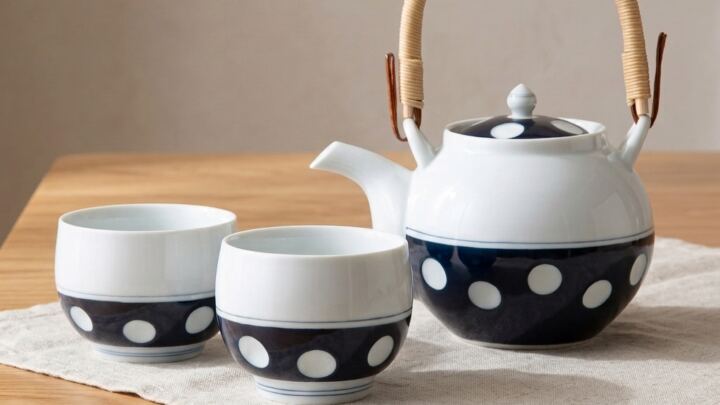
Most conversations about office materials stop at desks, flooring, and acoustic panels. The small objects get ignored, which is odd, because those are the things people actually touch all day. The cup someone drinks from at their desk, the dish that holds paperclips, the vessel a plant sits in. Get those right and a workspace feels considered in a way that expensive furniture alone never quite manages.
One material does this better than almost anything else, and it has been refined for four hundred years. Arita porcelain, made in a small town in southern Japan, is worth knowing about if you care how a workplace feels rather than just how it photographs.
What Arita porcelain actually is
Arita is a town in Saga Prefecture where porcelain has been produced since the early 1600s, making it the oldest porcelain tradition in Japan. The clay found nearby fired into something far whiter and harder than the pottery being made elsewhere at the time, and the craft grew from there into a regional industry that still runs today.
The result is a porcelain that is thin, strong, and almost translucent when held to the light, usually decorated in cobalt blue or restrained multicolour patterns. It reads as clean and precise rather than rustic, which is exactly why it sits so comfortably in a modern interior rather than fighting it. Four centuries of refinement have stripped it back to something that looks quietly contemporary, even though the technique predates almost everything else in the room.
Why hard materials matter in a soft trend
Office design has spent the last decade going soft: felt, foam, rounded edges, muted colour. That shift solved real problems around noise and comfort, but it has left a lot of workspaces feeling slightly weightless, as though nothing in the room would survive being dropped.
Porcelain is the counterweight. It is cool to the touch, genuinely durable, and it ages without looking tired. A ceramic desk tidy or a porcelain planter introduces a note of permanence into a room full of soft, replaceable things. Designers talk a lot about biophilic design, the idea of bringing natural texture and material into the workplace to support wellbeing. Fired clay belongs in that conversation just as much as a living wall does, and it needs far less maintenance than most of the greenery that gets specified for the same reason.
There is a textural argument too. Open-plan offices tend toward a narrow palette of laminate, fabric, and painted steel. A single hard, cool, handmade surface breaks that monotony in a way the eye and hand both register, even if nobody in the room could name what changed.
Where it works on the desk
You do not need to redesign anything to use it. A few placements do most of the work.
On the desk, a porcelain cup or a small dish for oddments beats the usual plastic. For planting, a porcelain pot turns a standard desk plant into something intentional rather than an afterthought. In meeting rooms, a simple carafe and matching cups signal that the space is looked after, which quietly shapes how people behave in it.
The trick is restraint. One or two well-chosen pieces per zone carry the effect. A cupboard full of mismatched mugs undoes it instantly. If you are sourcing, a focused range of Arita porcelain gives you pieces that share a visual language, so a cup in one room quietly relates to a planter in another without matching exactly.
Communal areas and breakout spaces
The place ceramic earns its keep most is the shared kitchen and the breakout zone, because those are the areas that tip fastest into clutter. This is where thoughtful vessels do real work.
A few good bowls for communal snacks, fruit, or the inevitable shared sweets change how a kitchen counter reads. Instead of torn packaging and plastic tubs, you get a small still life that people are quietly motivated to keep tidy. Ceramic also handles daily use far better than the alternatives, since it does not stain, scratch, or absorb odours the way plastic does. A set of handmade Japanese ceramic bowls in complementary glazes does more for a breakout area than another branded acrylic tray, and it lasts for years rather than a season.
The same logic extends to serving during meetings and events. Bringing out real ceramic rather than disposables is a small signal that the moment matters, and people respond to it. It costs very little and it photographs far better than catering plastic, which matters if the space doubles as a place to host clients.
The wellbeing angle is real
There is a psychological point underneath all of this, and it is not marketing. People treat good materials with more care than cheap ones. A disposable cup gets discarded without thought. A piece of porcelain that feels considered tends to be washed, kept, and looked after. That small shift in behaviour, repeated across a team, changes the texture of a workplace over time.
Arita ware carries that weight easily because it was built to last. Pieces are handed down through generations in Japan, used daily for decades. An object made to that standard brings a different energy into a room than one designed to be replaced next year. It also aligns neatly with the sustainability goals most offices now claim, since the greenest object is usually the one you never have to rebuy.
Caring for it
None of this is high maintenance. Most modern porcelain of this kind is dishwasher safe, though hand washing protects hand-painted detail over the long run. It handles daily use without special treatment, and unlike a lot of design-led objects, it does not need to be babied to keep looking good. The occasional chip on a well-used piece tends to read as character rather than damage, which is part of the point.
A note on buying well
Two things are worth checking. First, look for pieces that are genuinely from Arita or made in the same tradition, since the name gets used loosely. A reputable source will say where a piece comes from. Second, favour simple shapes and restrained patterns for an office, since the busier decorative styles, beautiful as they are, can feel out of place against modern furniture.
None of this is about turning an office into a museum. It is about choosing the few small objects people handle every day with the same care you would give the desks and the lighting. Porcelain is a quiet upgrade, and a four-hundred-year-old one at that. In a workspace full of things designed to be thrown away, it is one of the few materials that earns its place by lasting.